
Articles
How to do Transactional Analysis Therapy
If you are interested in doing Transaction analysis therapy the best way is to participate in the Introductory 101 Transactional Analysis workshop.
The 101 workshop TA is run over two days, and people go on this workshop to learn about themselves and often see it as a personal development two days.
On this two-day workshop you will learn a personality model of how you became the way you are, a model for personal communication, and a model of child development.
The workshop is also a prerequisite for undertaking training to do Transactional Analysis therapy.
Once you have decided that you want to become a Transactional Analysis Psychotherapist, you will need to find a centre that will teach you how to become a Transactional Analyst Psychotherapist. The Psychotherapy training, as well as teaching you the major methods of Transaction Analysis, will also focus on you knowing yourself as a personal and psychological level.
Transactional Analysis Psychotherapy Training today
Transactional Analysis Psychotherapy Training, is very different than the Psychotherapy training of Transactional Analysis of 50 years ago.
Eric Berne ,when he created the model of Tansactional Analysis ,did not envisage his Transactional Analysts working with the unconscious part of the personality, he was in many ways the early CBT therapist of the early 1950s- 1960s.
His early transactional analysis model of Parent- Adult- Child ,was very much about facilitating the patient ,to develop and strengthen his adult ego state.
This was not achieved in his opinion, by using his TA to work with the patient’s Child Ego state,but to teach him how utilise his Adult ego state, rather than his Parent or Child ego states.
Eric Berne used to teach his patients how to turn the noise down from their Parent Ego state, and to gain more power to the Adult ego state.
Eric Berne would talk about the unconscious or how to work with the Child ego state ,but he did not encourage his students, to work in depth. within the unconscious process of the client/ patient.
However 50 years, on Transactional Analysis Psychotherapy is a different animal ,and many of the later TA authors, and Psychotherapists, teach and facilitate patients on how to analyse and work with the unconscious Child ego state
For further interest in transactional analysis psychotherapy training click here
Psycotherapy and Psychotherapy Training in Chorlton Manchester UK
The Manchester Institute for Psychotherapy (formerly The Life Stream Centre) was established in 1987 and moved to Chorlton in September 1988 where we have been ever since!
We have been in 454 Barlow Moor Road, Chorlton, for the last two decades – it has been an enormously enriching and challenging time.
The Institute is a four storey building comprising of twelve rooms and Two Training Rooms.
Over 18 Psychotherapists and Counsellors work from The Institute – most have been with us for many years.
For over 25 years we have offered a wide range of services to the community from Individual Therapy to Group Therapy and Personal Development Courses.
In 1993 we also established a Training Arm to the services we offer and to that end we have been training people to be psychotherapists since that time to the present day.
Recently we have extended our services by training people in the areas of Clinical Supervision and Child and Adolescent Studies.
In fact we now offer counselling and therapy to children as well as adults.
We are proud of our achievements and the services we have grown over the years, and we are specifically pleased to be serving such a vibrant community as Chorlton, where we feel we truly belong!
If you are interested in Transactional Analysis click here
Thank you.
Bob Cooke
(Founder of MIP)
What Is Supervision
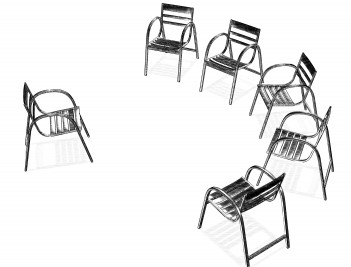 There are many areas of Supervision; Clinical Supervision, Counselling Supervision, Organisational Supervision, Educational Supervision and indeed Coaching Supervision. On this site we will be providing articles, blogs etc., on all areas of Supervision, though specifically Psychotherapy and Counselling Supervision. Clinical Supervision, which covers both the Psychotherapy and Counselling worlds is a relatively new profession. If we look back at the 1950’s/1960’s we see that Clinical Supervision was mainly used in the area of Psychoanalysis and Psychodynamic World. By the 1970’s/1980’s the teaching and nursing professions started to explore the use of Supervision in their professional practices. Both of these professions use Supervision mainly as an educative discipline rather than an interpretive and analytical discipline. With the emergence of psychotherapy and counselling post 1950’s we see the proliferation of Supervision into these disciplines.
Also we saw in the 1980s the inclusion of Supervision into the Managerial and Occupational Sectors.
Clinical Supervision for Psychotherapy and Counselling has come of age in the 21st century and we see that there has been a huge number of books and articles written on the subject of Supervision within the last three decades.
A recent definition of Supervision which I like is “Supervision is a working alliance between two professionals where supervisees offer an account of their work, reflect on it, receive feedback, and receive guidance if appropriate. The object of this alliance is to enable the worker to gain in ethical competency, confidence and creativity as to give the best possible services to clients”. (Inskipp and Proctor, 2001,)
It is fair to say that the major players in any Clinical Supervision is:
- The Supervisor
- The Supervisee/Therapist
- The Client
Within this framework Supervision is primarily focused on the Supervisor helping the Supervisee/Therapist to develop their specific skills in the service of the client.
There are many models, tools, and techniques as well as information to help the Supervisor in this process.
Two specific models that are useful in this context are :
- The “Seven-eyed Model” sometimes called the Process Model. This model was developed by Peter Hawkins and Robin Shoet in their book “Supervision in the Helping Professions” (1989)
- The “IDM Model” which is a Professional Developmental model created and developed by Stoltenberg and Delworth 2001 and written extensively about in their book called an “Integrative Developmental Model” (2000).
The “Seven-eyed Model” or Process Model is specifically useful in providing a map for the Supervisor to know where they are, at any time, within the Supervisor relationship with the Supervisee.
What is also particularly useful when using this model is the focusing on the particular “Modes” that the Supervisor/Supervisee will visit.
Mode’s within this Model
Mode 1 – The Supervisor within this Mode will be focusing on helping the Supervisee sharpen their “Behavioural Observation” when working with the clients.
Mode 2 – The Supervisor, when focusing on “Mode 2” will be facilitating.
The Supervisee to look at the strategies, goals, contracts, and treatment plans – direction for the client. In this Mode there will be an emphasis on the nuts and bolts of interventions within the therapeutic relationship.
In other words “Why” the Supervisee/Therapist decided to use that specific intervention at that specific time within the therapy relationship.
Mode 3 – The Supervisor when focusing on “Mode 3” will be helping the Supervisee to concentrate on the “Dance” between the Supervisee and the Client in the therapy relationship.
In other words to look at the transference projections of the client on the therapist within the therapy relationship.
The use of metaphor and imagery are useful techniques for this particular stage.
Mode 4 – The Supervisor when focusing on “Mode 4” will be looking particularly at the counter-transference of the Supervisee/Therapist within the therapy relationship of themselves and the client.
Mode 5 – The Supervisor in “Mode 5” will be looking at the relationship between the Supervisor and Supervisee within the Supervisors Office.
Mode 6 – The Supervisor in “Mode 6” will be looking specifically at his own counter-transference within the Supervisor/Supervisee relationship.
Mode 6 and Mode 5 are useful Modes to look at the “Parallel Process” between the Supervisor/Supervisee and the Supervisee/Therapist and their client.
Mode 7 – The Supervisor in this Mode will help the Supervisee concentrate on the Organisational and wider Environmental restraints on the Supervision.
This “Seven-eyed Model” provides a comprehensive and systemic model for examining the process of Supervision. It will be useful for Supervisors and Supervisees alike.
Another Supervision Model which compliments this model is the “IDM Model”, first postulated, as said above, by Stoltenberg and Delworth (2000).
This Model is a Professional Developmental Model.
The authors of this Model put forward the case that for effective Supervision to take place, the Supervisor needs to be aware of the Professional Developmental needs of the Supervisee/Therapist.
Also the Supervisor needs to be aware of the use of “Parallel Process” as a major tool within Supervision.
If the Supervisor is aware of such concepts as parallel process and the two models mentioned above then I believe more effective Supervision is likely to take place.
Other models, such as the “Procedural Model” and the “Tasks of Supervision” are also useful in the art of Supervision.
five stages of grief – elisabeth kübler ross
five stages of grief – elisabeth kübler ross |
|
| EKR stage | Interpretation |
| 1 – Denial | Denial is a conscious or unconscious refusal to accept facts, information, reality, etc., relating to the situation concerned. It’s a defence mechanism and perfectly natural. Some people can become locked in this stage when dealing with a traumatic change that can be ignored. Death of course is not particularly easy to avoid or evade indefinitely. |
| 2 – Anger | Anger can manifest in different ways. People dealing with emotional upset can be angry with themselves, and/or with others, especially those close to them. Knowing this helps keep detached and non-judgemental when experiencing the anger of someone who is very upset. |
| 3 – Bargaining | Traditionally the bargaining stage for people facing death can involve attempting to bargain with whatever God the person believes in. People facing less serious trauma can bargain or seek to negotiate a compromise. For example “Can we still be friends?..” when facing a break-up. Bargaining rarely provides a sustainable solution, especially if it’s a matter of life or death. |
| 4 – Depression | Also referred to as preparatory grieving. In a way it’s the dress rehearsal or the practice run for the ‘aftermath’ although this stage means different things depending on whom it involves. It’s a sort of acceptance with emotional attachment. It’s natural to feel sadness and regret, fear, uncertainty, etc. It shows that the person has at least begun to accept the reality. |
| 5 – Acceptance | Again this stage definitely varies according to the person’s situation, although broadly it is an indication that there is some emotional detachment and objectivity. People dying can enter this stage a long time before the people they leave behind, who must necessarily pass through their own individual stages of dealing with the grief. |
Relationship Therapy and Object Relations Within a Therapy Session
Relationship methods and techniques, as well as Object Relation ideas, are described throughout the therapy session outlined in the article. Also they are analysed and commented on within the article.
My client, Sue, had been in therapy with me for approximately six months on a weekly individual basis. She saw me at the Institute and the sessions were of 55 minutes duration. The long term therapeutic contract with me was that she warned to be less agitated and more relaxed in her life.
This particular session was at 10.00 am on a Thursday morning. I opened the door to her, invited her into my consulting room and asked her if she wanted a cup of tea. She said yes and, after some casual transactions, I asked her what she wanted from this particular session.
She told me that she wanted to take the Negative aspects of her father off me, and to be able to act in a Positive healthy way with me.
I asked Sue the reasons that she wished to do this, and she answered, so that she could feel safe and secure with me in the therapy session. I inquired further and asked what benefit it was for her to feel safe and secure with me. She replied that the process would help her positively enhance her life and this was the first step for her in this specific direction. She also added that she would not be able to work in a therapeutic way with a therapist that she did not feel safe with!
I agreed with her that this was vital for a positive, Therapeutic relationship to form between both of us. I then asked her how she was feeling.
She replied that she felt more relaxed and warm inside since we had some contact between us and that even as we spoke, she was beginning to take some of the negative qualities of her father off me.
I asked her how she was doing that, and she answered that the response from me was different than from her father’s, that he would not be with her as I was being.
I then asked her to explain more and she went on to say that, with her father, there would be no dialogue, no real conversation. He would not take her into account in any real way, whereas she felt that I was, at the moment, honoring her by being sensitive to her needs. I replied to Sue that I was pleased that she had already begun the important process of separating me from her father.
At this point, I decided to use physical and visual comparisons with myself and her father as a methodology for Sue to differentiate between us. To this end, I asked Sue how different visually and physically I was from her father. She went on describe some of the differences.
For example, she told me that I had different coloured hair than her dad’s hair, my nose was larger, though for her, my mouth and lips were similar in some ways. She said, that my smile seemed much warmer to her than her father’s.
Particularly, at this thought, she seemed to me to be much more relaxed and as the process of differentiation continued her whole posture changed and she was sitting in relaxed manner. She did not appear to be as stiff and rigid as she had been at the beginning of the session.
I logged this mentally and then went on to encourage her to anchor how she felt now and to integrate and remember the warmth of her visual memories of me and how I am different from her father, so that she could take those different memories away from die session with her.
Sue went on to say that she felt much better than earlier on in the session and now felt much more positive towards me. She reported feeling relaxed and secure with me and said that she was happy at that. She then asked me for a hug – which I gave her and we completed the session in this symbolic way.
In analyzing this session, I intend to comment on this particular piece of work, firstly from an Object Relations’ framework and secondly from a ‘Relationship’ frame of reference.
By looking at this work from an Object Relations framework, the primary goal of the session for Sue was to move from her negative self object to a positive self object
. The negative self object that she was transferring onto me was her father, who physically and emotionally abused her in her childhood. By Sue placing me as the negative self object within the therapeutic relationship, she was replaying the abuse within her own internal structure. She was reinforcing the past as in the here and now reality.
Sue recognised that, for her, I was taking on this archaic role. She did not want this, she did not want to replay her past patterns and responses. She wanted to see me and to respond to me as a positive self object. This was very important to her.
Indeed it was vital in the area of Sues healing and cure.
she wanted me to be a healthy self object that would be secure, nurturing and dependable in a soothing and growth-full way. Seeing me in this way would be helpful, not only in an internal soothing way, but also this internal security would mean that, externally, she would feel safer to contact others within her life in her present day functioning.
This process could be seen within an Object Relations framework as an ‘Idealizing transfer’ from Sue to myself
This process was helpful to Sue as she reported feeling more relaxed and contented, more secure within herself as she left the session. This indicated to me that she had begun to take me on board as a self soothing; self object that she wanted and needed to enable her to have the internal base to confront the memories and effects of the childhood abuse she suffered at the hands of her father. This then, provides a positive and necessary platform for future therapy.
In explaining the same piece of work from a ‘Relationship’ framework”, it is necessary first to define what we mean by Relationship therapy’.
Relationship therapy, for me, has three major concepts which need to be mentioned here. They are the cornerstones for any relationship therapy. Erskine (1991) talks of the need for Inquiry, Attunement and Involvement as the major prerequi¬sites for any therapist working from a Relational standpoint..
Turning to this methodology then, Inquiry is a gentle contactful method of coming alongside the client in order to unpack and discover the roots of the past. Inquiry is about finding out. In some ways you must become the Sherlock Holmes of the therapy process, in a respectful way of course, not a shaming way.
If we analyze the dialogue with Sue and myself in our therapy session, we can see that I am Inquiring in the following ways:
Firstly I Inquire respectfully what she wants from the session, to which she replied that she wished to take the negative aspects of her father off me. I went on to further inquire as to her reasons for doing this. Her reasons were that she wanted to feel safe and secure with me in the therapy sessions. Further Inquiry was to find out how she would benefit from feeling safe and secure with me. To which she replied it would enhance her personal growth.
This use of inquiry by me was vitally important for the Relationship to begin to bond and for the attachment process to begin between Sue and myself. Indeed, it is in the Inquiry process that the solid foundations for Relationship therapy begins.
Attunement is concerned with the therapist being there with the client, seeing her, hearing her and validating her experiences and feelings. It is the sense of ‘being with’ instead of ‘doing to’. Attunement is about ‘getting into the skin of the client’. It is about the therapist being in touch as fully as possible with the needs and feelings of the other person. As Erskine (1991) says, ‘the communication of attunement validates the client’s needs and lays the foundation for repairing the failures of previous relationships”.
With Sue, i attuned to her in the following ways:
Firstly, when Sue said she would not be able to work in a therapeutic way with a therapist she did not feel safe with, I agreed with her that it was vital that she felt safe with me in order that she have a positive therapeutic relationship. I validate here, her thinking linked to her past experiences and it is important for her that I have a full understanding of her process and show it in some way, either verbally or physically. I chose the verbal method.
Another example of Sue being Attuned to me in this session was that she dialogued with me in a way that she would not have done with her father. This was mainly because she saw me as validating her ‘sense of being’ and that I was sensitive to her fundamental needs.
Involvement, as with Inquiry and Attunement, is basically about the therapist being fully present and in full contact with the client. It is through involvement that we validate and Normalize the client’s experiences. In other words we involve ourselves through the use of Inquiry and Attune¬ment in the world of the client. It is through Involvement with the client that we come to understand the very nature of the person that we are working with.
An example of how I used the method of Involvement with Sue was specifically evident at the end of the session when I asked how she felt now, and encouraged her to integrate and to remember the warmth of her visual images of me and how I am different from her father. My involvement was very much anchored through the bonding that I undertook to anchor the feeling of warmth that Sue had developed towards me through the session.
This was symbolized by the hug that she asked for from me, and that I gave her at the very end of the work.
This hug is true involvement of Contact at the somatic level, which she can then carry away from the therapy session with her into her present day life.
The active Relationship therapy model that I followed with Sue can be summarized as follows:
Through Inquiry I have found out what Sue wanted, and by Attunement with her, we got into the feel of the therapeutic process and therefore helped facilitate what she wanted to experience, which has made it possible for me to be me, and her to be her. Involvement is me using my presence to help anchor arid encourage what has happened between us within the therapy process. The hug encapsulated the involvement which existed within the whole of the therapeutic session.
Indeed it was through her” Relationship” with me in the “here and now! that the “Real “healing took place and could be worked through within the different aspect of the Self!
Transactional Analysis and Ego States
Transactional Analysis is first and foremost a therapeutic tool for positive change and growth. It can be used either in therapy for the individual concerned or on a more surface level for problem solving in everyday life.
TA is basically the study of how people take on certain behaviors, either by accident or from their early caretakers or authority figures and then continue to play them out in their adult lives. It is a model for people to use to work towards ‘autonomy’, a place from where they can choose to live the way they want to and not to be still acting as if they are controlled by past events or messages.
Transactional Analysis then is a modern psychotherapy model, which has; it’s own particular language and theory of personality. It states that the person transacts with a person in certain ways, structures their time between life and death in a particular way, plays their own particular games and lives out their own unique script.
An understanding of Transactional Analysis can give hope for the person in that they can change their script and choose the way they want to re-write their own life plan, without hanging on to inappropriate behaviors of the past.
The creator of Transactional Analysis Was Eric Berne, a Psychiatrist and a man who was largely influenced by Freud,though by the time of his death in 1970,he had become a,in some ways, a critic of Freud. Transactional Analysis though does have its roots in Psycho dynamic theory.
The personality for Transactional Analysis, for Berne, is based on the recognition of three quite different ego states, called specifically the Parent, Adult and Child.
An ego state for Berne is:
‘a system of feelings accompanied by related set of behaviour patterns.’
For example, spontaneous feelings, compliance and rebellion are all features of the child ego state and may be activated by the individual at any time throughout his life.
Berne recognised that three such ego states must be in everyone and that together they make up the unique individuals Personality.
For Berne the ego states are not roles but are phenomenological realities.
Each ego state is concerned with what actually happened in the past for that person and how they acted will determine how they act in the here and now. The decisions that they made then will determine the decisions and behaviours they now make in the present.
The Parent Ego State
(Case Study One)
Bob was the leader of his group of friends and it was he who always set the time that they should meet, where they should go and what they ‘should do’. He often shook his finger at his friends reprovingly. People in his circle of friends eventually got fed up of him and many left the group.
(Case Study Two)
Mary and Joan were good friends and they went everywhere together. When Joan’s mother died it was Mary who looked after her and often put her arm around Joan saying such words as ‘Don’t worry about things. I will help you with all your work; I love you a lot you know’.
The above then, are examples of a controlling parent behaviour and a nurturing parent behaviour,of the Parent Ego state
The Parent Ego State
The parent ego state contains the attitudes and behaviours that are observed and copied from the individual’s caretakers and figures. In other words the spoken and unspoken rules. The “shoulds’ and the ‘oughts” of life. The individual’s early parent is formed in the child from birth to approx five years and in Transactional Analysis terms is called the parent in the child or the P1. The complete parent ego state or the P2 is formed between the ages of five years to approx twenty years as a result of even more external stimuli from their authority of caretaker figures.
When the P2 is activated in later life, the person will be acting in the ways that their authority figures will have acted, indeed this is the model that the individual will have incorporated into his own parent, though it must be noted that each individual will have a different parent ego state and will act in their own unique way.
The Adult Ego State
(Case Study Two)
James decided to go and see his aunt who lived in the next town – as he had never left his town before, he had to get his map out to work out how he would get there – this he did successfully and he got to his aunt’s house at the time he said he would. Thus we can see that James used his adult ego state to work out logically, given the facts, how to solve a given problem.
The Adult Ego State emerges around six months in the child and is concerned primarily with appraising facts, reasoning, thinking, evaluating and responding to available data.
It is described by many Transactional Analysis writers like a computer, concerned only with rationality and logic.
However, I think this position is some what misleading and I prefer Berne’s commentary, which describes that adult as coming from an integrated stance which does not mean that when the person activates their adult ego state he is coming from just a rational position, but that he also has access to feelings, thinking and attitudes. Indeed the person will be part of the ‘here and now’ and experiencing and coming from an integrated adult stance.
The Child Ego State
(Case Study One)
When john’s mother died when he was three years old, he was too young to really understand what had happened, he just felt hurt that his mother had gone away. When he was fifteen years of age, John had a hard time trusting women – he often complained that women left him and let him down a lot when he most needed them. Other people felt that women were really good to him and helped him a lot.
(Case Study Two)
Fiona when a small girl could get her father to do anything she really wanted. Indeed as she grew up she was very good at managing to get men to do what she wanted. Later, she was fired from several jobs by her bosses who said they felt she was manipulating them.
(Case Study Three)
As a child, Freda’s parents argued a lot and her major method of defense was to withdraw and spend a lot of time alone going for long walks. At eighteen she got sacked from many jobs for daydreaming and fantasizing. In her personal life, she would withdraw mentally if her friends argued with her. They got fed up with her and left.
People who spend a lot of time operating from a child ego state usually are acting as they did when they were a child. For example, Freda lost a lot of jobs because she daydreamed when she should have been concentrating on her work. Fiona attempted to manipulate men in her life with the expectation that she would get what she wanted as she had from her father when a child.
Being in your child ego state does not mean that you are being childish. It simply means that you are acting out as you did when you were a child.
The Child Ego State
The Child Ego State is primarily concerned with feelings though that does not mean that when in the ‘here and now’ experience the person does not have access to attitudes and thinking, but it simply means that when activated feelings are usually the executive energy force.
The child ego state is the part of the personality, which is preserved from actual childhood; it also contains all the impulses a person was born with. The child ego state is, as said above, primarily about spontaneous feelings, needs and wants of the child. It is also important to note that the child ego state contains ‘recordings’ of childhood memories and experiences. Therefore, when the person feels and acts as they did when they were very young, they are experiencing their child ego state.
The personality can be subdivided further into the Nurturing and Controlling parent and the Free and Adapted child. An example of the nurturing side of the parent ego state would be the person who lovingly takes care of the dog who go injured whilst crossing the road. An example of the controlling parent being activated would be in the person who might say ‘all dogs should be kept on leads and not allowed to roam free’ and do nothing to look after the injured dog. From this particular example we can see how the same ego state can act in different ways according to person’s past messages.
An example of the difference between the free and adapted child ego state would be for example, the person who complies to almost anything and perhaps may automatically say ‘thank you’ whilst repressing other feelings as opposed to the free child stance of free and spontaneous feelings, according to the situation. The free child is naturally inquisitive, curious and often does act without thinking of the consequences.
Another stance of the adapted child position is one of pseudo-rebellion. In other words, an aware adaptation to a particular situation is the flip child of the compliant child stance.
Again I think it is important to mention here that different people will respond differently to situations and thus different ego states will be activated according to their past messages in life. But, almost certainly, most people will have access to all parts of their personality if they wish, though according to their particular pathology, certain ego states may well dominate their personality in may situations of their lives.
Structural Pathology
This is the part of TA theory that deals with when we get, “stuck” in one Ego State or part of the Self.
The Two major parts of Structural Pathology are Contaminations and Exclusions.
Contamination’s between the different parts of the personality or ego states simply means that two ego states overlap or distort so that the person often feels he cannot keep the different ego states separate from each other.
He will often describe a ‘stuck’ feeling within his personality. A lot of work in Transactional Analysis is around alleviating this ‘stuck’ sensation or de-contamination, as it is known. An example of a child/adult contamination from a child stance would be a person stating,
‘If I believe my mother is not dead for long enough, she will not be’
Or
‘If I wear my lucky medallion, I am bound to pass my exams without even revising.’
In other words, in these statements, there is obviously a distortion of adult reality from the child’s perspective. It is then necessary to cathart the adult. Contamination can also occur between parent and adult and often does; you may even diagnose double contamination between parent and adult and the child and adult ego states.
Contamination whether from a dominant parent or a dominant child ego state will lead to a dysfunctional ego structure and the person will stay in the unreal position for him or her. This may provide a certain degree of security for the person as it will be familiar to them, but it will also inhibit the real potential for positive change in their life. What the person needs to be able to do is to have access to all ego states and also be able to redistribute his energy evenly in all of them.
An example of a parent/child contamination would be when a person uses such statements as ‘coloured people are inferior to white people’ and ‘boys are cleverer than girls’.
These examples are obviously prejudiced and occur when the person acts or behaves as though something he believes in is the absolute truth and valid for all time. It often comes directly from their own authority figures and is not necessarily true, thus the person, instead of moving to check out the belief by using his adult ego state instead takes it straight on board into his own parent.
Identifying the different Ego States of the Self.
So far, I have described the structure and function of the different units of the personality and how you might be aware of which part you may be operating from in you life experiences. To enable you to identify even more specifically which ego state you are coming from in a specific situation, there are certain clues, which will help you. There are many ‘behaviours ‘which are typical of each ego state.
Your Child Ego State
When coming from a Child Ego State, your tone may be one of laughing, screaming, angry, rebellious, whining, helpless, stubborn or playful. Your words may be ‘wow! I love you. Brill. I hate you. Ace. Amazing. Incredible, I never do it right. Sorry!
Your Critical Parent Ego State
Your tone of voice may be harsh, strong, self-righteous, critical, ordering, dogmatic, uncompromising, overbearing. The posture here will likely be upright, hands on hips, wagging finger, head upright, invasive, erect. The words could be – lots of “woulds, Shoulds” disappointed in you, upset by your behaviour, eat all your food, children should be seen and not heard, don’t be late, stupid, when are you going to do…….., why have you not……….
Your Adult Ego State
The tone of voice may be measured, clear, precise, crisp, rational, logical. Words may well be very factual. ‘I see you are well, how long is it to London, what time is it, it is a fact it is cold today!
All the above words and behaviours, will then give you some clue as to what ego state that person is operating from and thus what you can do to change the situation for yourself. However, it must be remembered that these are only some of the clues for exact ego analysis, you will need more evidence or information for a positive and accurate diagnosis. You may need to ask more historical questions and certainly, you will need to see the person in the ‘here and now’ to be certain of you analysis.
The Egogram in TA theory
To talk about the ego structure and not to mention the innovation of the Egogram by Jack Dusay in the early 1970s would be a disservice in my opinion to Transactional Analysis. An Egogram is simply defined as:
‘a bar graph showing the relationship of the parts of the personality to each other and the amount of psychological energy emanating outward.’
The Egogram is a bar graph showing the amount of energy within the ego structure of the person and how he will re-distribute his energy within the different egos at one given time. Thus the most important aspect for the use of the Egogram in modern psychotherapy is that, it gives an evaluation of the distribution of energy in the personality, and it can be used by the individual to show how much energy is needed to be re-distributed to other parts of the personality to make positive change. It is simple to construct and use, for example, firstly, draw a horizontal line on a piece of paper. Underneath, label the five ego states – adapted child, free child, adult, controlling parent and nurturing parent.
Think of yourself at this particular time or at a specific moment in the past, draw whatever you feel is the most energised part of your personality, and draw it with a vertical line. (This will be your highest column.)
Now, using your intuition, draw the lowest energised part of your personality as it is in comparison with the other. (This will be the lowest column.)
Then fill in the other states as you see them in comparison with the above.
Having done the exercise, you should have now an egogram of the distribution of your energy within your personality at a given time. This will help you see where you might need at certain times to re-distribute your energy to help solve problems in life or therapy.
At this point it is important to mention the constancy hypothesis. As John Dusay suggests in his book on Egograms, when the energy in one Ego state increases, the energy in another Ego state decreases, which means that one can successfully distribute one’s energy from one Ego state to another. Indeed, having used Egograms successfully in my own self-evaluation whilst in therapy, and with my own clients within my practice, I have come to the conclusion’ that the creation of the Egogram by Dusay has been invaluable to modern psychotherapy and especially Transactional Analysis. Certainly, it shows graphically, the kind of person you are and will show you the way you can positively change to be the person that you want to be in your life.
If you are interested in Transactional Analysis training click here
Theme sponsored by: Adderall website where you can buy Adderall online buyadderall.com and learn about how Adderall and how phentermine works. You can learn about how to buy phentermine online from USA and how phentermine works. Also find out how Modafinil works when you are planning on buying Modafinil online
POTENCY, PERMISSIONS, PROTECTION and PUNISHMENT
When working with clients, I often think about the concepts of Potency, Permissions, Protection and Punishment that have been written about, throughout time, in the Psychotherapy and Psychoanalytical literature.
When considering the Transactional Analysis literature, it was Pat Crossman, back in 1972, that first alerted us to the ideas of Permissions, Potency and Protection within the clinical domain. The idea of Punishment, being important to consider within the therapy frame, was first written about by Eric Berne when he talked about his ideas concerning “script backlash”.
When using Permissions in Psychotherapy, it is important to consider the developmental perspective when giving these Permission Transactions. In other words once must consider the “psychological age” of the client in the therapeutic relationship.
By considering the developmental age of the client, you can then gauge the Permission Transaction which is necessary for the particular age of the client, at that time in therapy. For example, you might give the “Permission To Be” to a client that is particularly young and has fundamental issues concerning their very existence and right to live.
Other Permission Transactions, such as “You have the right to think”, and “You have the right to have feelings” may be given at a different developmental age.
When giving Permissions I always consider the possible “script backlash” which might occur if the client follows through on the Permission Transaction. i.e., If the client in their childhood was punished for expressing feelings, they may give themselves the same internal punishment when “practising” following the therapists Permission Transaction.
Protection and Potency are important qualities for any Psychotherapist to cultivate, and much has been written to this effect.
Richard Erskine, writing about his methodology with regards to Integrative Psychotherapy, talks about Attunement, Inquiry, Involvement and Presence as part of a Therapists potency.
In conclusion, it is important for any Psychotherapist, whether a Transactional Analyst or from any other modality to consider, and I believe, practice, the above concepts of Permissions, Potency and Protection.
Furthermore, it is vital for all Psychotherapists to Inquire about the possible “Script Backlash” or Perceived “Punishment” that a client may occur when “Putting a new script on the road”.
Bob Cooke T.S.T.A.
March 2013.
Bereavement and Loss; Some Thoughts
‘Bereavement, for most of us, will be the most distressing experience we will ever face’ (Cruse Bereavement Care)
Grief:
We grieve after any sort of loss, but most acutely after the death of someone we care about and love. Everyone experiences this grief but everyone experiences it differently. There is no right way or correct way to grieve. You may experience feelings of shock and numbness as you take time to grasp and understand what has happened even if someone’s death was expected. You may perhaps be overwhelmed with feelings of pain and distress. Often those feelings turn to anger; a completely natural emotion which usually happens as part of the grieving process. Guilt and longing are also very common. A lot of bereaved people will experience feelings of depression following the death of a loved one where they fail to see the meaning of life anymore without that person in their lives. ‘Grief can make you feel many different things. It’s important to remember that these feelings are not bad or wrong. They are simply how you feel’. (AgeUk)
During this grieving time you also have to deal with other people’s reactions. This can sometimes be very challenging as people often do not know what to say or how to respond to your loss. This can even lead to them avoiding you because they are so worried about saying the wrong thing, or facing up to the fact that someday they also will have to deal with a bereavement too.
You may have trouble sleeping, see changes to your appetite and be prone to more colds or even be more accident prone than before. Some people feel restless and edgy other people feel lethargic and exhausted. This is a time to be kind to yourself and not do too much while you are grieving.
How long will my grief last?
How long it takes to accept the death of someone close to you and move on in your life is very personal and different for everyone. It takes time to accept their death and cope and adjust to life without them. Your age and personality as well as your personal circumstances, religious beliefs and whether you have been bereaved before, may influence how you deal with your bereavement.
If you allow your feelings to be expressed it can help you cope with your loss. Taking in the reality of the death will be helped if you talk about the person who has died. You will keep that person in your thoughts and memories, but, by dealing with the present you will slowly find a way of living without the person alongside you.
The future?
AgeUK write about looking to the future. They advise that looking back at your life, no matter how young or old you are, is a chance to take stock of the contribution you have made to the world and a bereavement does not take that away. Look forward and realise that you still have something to offer. They suggest making the most of every opportunity to spend time with other people. Take care and time with major decisions, try not to jump into things too quickly.
Help and support
Family and friends can support you through your bereavement. There are also many organisations that offer excellent advice such as Cruse Bereavement Care and AgeUK. Here at Manchester Institute for Psychotherapy we have experienced counsellors and therapists who can help. Talking to a therapist can help you to deal with your feelings of grief. Our emphasis is on friendliness and providing a safe and warm environment. You can phone the Institute on: 0161-862-9456 to book your initial assessment or contact us via email.
Loneliness; Are you one of the 48%?
‘Loneliness and the feeling of being unwanted is the most terrible poverty’ Mother Teresa
According to a BBC poll published this October almost half (48%) of all adults in England say they experience feelings of loneliness.
Mervyn Kohler a Specialist adviser to Age UK says; ”Loneliness is on the increase for a variety of reasons, mostly because of the changing nature of society.”
Loneliness is not confined to just one sector of the population. According to the poll, 18 to 24 year olds experience it just as much as those people who are in their sixties or older. The poll discovered that if you are between 30 and 50 you are less likely to be lonely, probably because you have a houseful of children or teenagers and are busy working.
What is loneliness?
Loneliness is not the same as being alone. People do choose to be alone and live perfectly happily without a great deal of contact with others. In contrast you may see lots of people, be in a family and/or a relationship but still feel lonely.
‘Loneliness is not feeling part of the world. You might be surrounded by loads of people but…. You are (still) lonely’ Mind
Loneliness is therefore an emotional state but it can have a big impact on our mental health and our physical health too.
How long does loneliness last?
Loneliness usually is a transient emotional state. It’s something that most people experience at some point in their lives. When we have a big change in our lives like moving to a new town for example or suffer a loss such as the end of a relationship or a bereavement then we experience the pain of being cut off from people; we feel lonely. Usually those feelings of isolation and sadness recede as you begin again to participate in the world, building new relationships that relieve the feelings of loneliness.
What happens if these feelings don’t go away?
For some people the loneliness doesn’t go away; they fail to get themselves out of this state of loneliness and gradually become more and more isolated. It can become a downward spiral as the loneliness can lead to self -isolation so that the person appears to others that they do not wish to form connections. This then of course deepens the feelings of loneliness even more.
Can loneliness affect your health?
Your mental health can be significantly affected by feelings of loneliness. Studies have shown that people who are lonely experience more stress and have low self -esteem. Loneliness can contribute to mental health conditions such as anxiety and depression. Being physically isolated can also lead to poor eating habits and having less motivation to exercise regularly.
What can you do to overcome loneliness?
The charity Mind give some great suggestions for you to try. They talk first about making contact. Connecting with the world around you can help alleviate feelings of loneliness. Small steps can help with this such as a phone call or email to someone. Having a walk and taking the time to say hello to someone or try to join in a conversation. Mind suggest that no matter how difficult make the most of opportunities for social contact.
Meeting new people and making new friends can help overcome feelings of loneliness. In most areas there are many different groups that meet and most welcome new members. They are usually advertised through local magazines and newspapers. It can be daunting going along to something for the first time and it will usually take a few weeks to feel settled but it’s worth persevering to see what happens.
If you spend a lot of time alone then learning to feel more comfortable about this can really help. This time alone could actually be a time for you to learn a new skill or spend more time on a hobby that you enjoy. Challenge yourself to turn what you see as a negative into a positive. Your time alone is time to yourself to do something just for you.
How can we help?
Here at Manchester Institute for Psychotherapy we have experienced counsellors and therapists who can help. Talking to a therapist can help you to deal with your feelings of loneliness and provide you with strategies that you can work on to overcome it. Our emphasis is on friendliness and providing a safe and warm environment. You can phone the Institute on: 0161-862-9456 to book your initial assessment or contact us via email.